



Comprehensive Clinical Guide: From Acute Pain to Functional Recovery
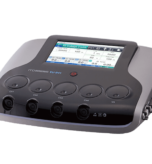
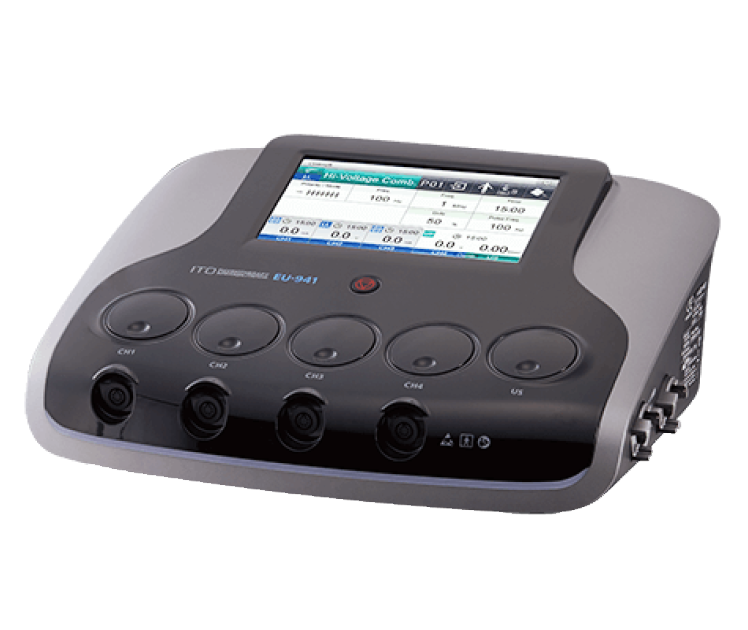
The ITO EU-941 & 921 Combination Therapy system by ITO Co., Ltd. integrates advanced electrotherapy currents with therapeutic ultrasound in a single, versatile rehabilitation platform.
This allows clinicians to select the appropriate current based on:
- Tissue healing phase
- Physiological objective
- Functional goal
- Patient tolerance
Below is a complete clinical breakdown of all modalities available within the system.
TENS (Transcutaneous Electrical Nerve Stimulation)
Physiological Mechanism
Stimulates A-beta sensory fibers → activates Gate Control mechanism → inhibits nociceptive transmission.
Clinical Use
- Acute and chronic musculoskeletal pain
- Post-operative pain
- Muscle guarding
Parameters
- 80–120 Hz → Acute pain
- 2–10 Hz → Chronic pain (endorphin release)
- Sensory-level intensity
Example: Acute Lumbar Strain
Reduces pain to allow early mobilization and active therapy.
Interferential Current (IFC)
Physiological Mechanism
Medium-frequency currents intersect to produce deep low-frequency stimulation with reduced skin impedance.
Clinical Use
- Deep joint pain
- Subacute inflammation
- Muscle spasm
Parameters
- 80–100 Hz → Acute pain
- 1–10 Hz → Chronic pain
- Strong sensory or mild motor
Example: Shoulder Impingement
Improves pain control in deep rotator cuff structures.
NMES (Neuromuscular Electrical Stimulation)
Physiological Mechanism
Stimulates motor nerves → visible contraction → improved motor unit recruitment.
Clinical Use
- Post-surgical weakness
- Muscle inhibition
- Neuromuscular re-education
Parameters
- 35–50 Hz
- 1:3–1:5 duty cycle
Example: Post-ACL Reconstruction
Restores quadriceps activation and knee stability.
Russian Current
Physiological Mechanism
Medium-frequency burst stimulation for high-intensity contraction.
Clinical Use
- Advanced strengthening
- Late-stage rehab
- Performance enhancement
Parameters
- 2500 Hz carrier
- 50 Hz burst
Example: Post-Fracture Muscle Atrophy
Accelerates strength recovery after immobilization.
Microcurrent (MENS)
Physiological Mechanism
Subsensory microamp stimulation → increases ATP production → enhances cellular repair.
Clinical Use
- Tendon injuries
- Soft tissue healing
- Inflammatory conditions
Parameters
- 100–600 µA
Example: Lateral Epicondylitis
Supports fibroblast activity and tendon repair.
HVPC (High-Voltage Pulsed Current)
Physiological Mechanism
Twin-peak monophasic pulses influencing galvanotaxis and edema control.
Clinical Use
- Edema management
- Wound healing
- Chronic ulcers
Parameters
- 80–120 pps
- Negative polarity (early phase)
- Positive polarity (proliferation phase)
Example: Diabetic Foot Ulcer
Enhances granulation tissue and epithelialization.
Therapeutic Ultrasound
Physiological Mechanism
Mechanical sound waves producing:
- Thermal effect (continuous mode)
- Non-thermal cellular stimulation (pulsed mode)
Clinical Use
- Tendinopathies
- Joint stiffness
- Scar tissue
- Ligament injury
Parameters
- 1 MHz → Deep tissue
- 3 MHz → Superficial tissue
- Pulsed → Acute/subacute
- Continuous → Chronic
Example: Frozen Shoulder
Continuous ultrasound increases capsule extensibility before stretching.
Why Combine Electrotherapy + Ultrasound?
Combination therapy allows:
- Pain reduction + tissue extensibility
• Muscle activation + improved circulation
• Healing stimulation + functional strengthening
Example:
Rotator Cuff Tendinopathy
- Pulsed ultrasound → tendon healing
- IFC → pain reduction
- NMES → prevent supraspinatus inhibition
Result: Faster progression to active strengthening.
Strategic Value for Clinics
The ITO EU-941 & 921 system enables:
✔ multi-phase rehabilitation in one device
✔ Evidence-aligned modality selection
✔ Reduced equipment redundancy
✔ Improved treatment efficiency
✔ Enhanced patient outcomes
Rather than using standalone devices, the EU-941 & 921 provides a structured, physiology-driven rehabilitation platform suitable for:
- Orthopaedic clinics
- Sports medicine centres
- Neurological rehabilitation
- Hospital physiotherapy departments
- Wound management units
Conclusion
The ITO EU-941 & 921 Combination Therapy system is not merely a multi-modal machine—it is a clinically adaptable rehabilitation solution. By aligning each current and ultrasound parameter with tissue healing stages and therapeutic objectives, clinicians can deliver targeted, measurable, and efficient treatment across the full spectrum of musculoskeletal and wound care conditions.
It bridges pain management, tissue healing, and performance restoration in one integrated platform.